In this article, we’ll explore the ever-evolving landscape of artificial intelligence, its significance across industries, and the critical role played by AI consulting services. This article dives deep into the AI development ecosystem by delving into the intricate AI development ecosystem, highlighting key players, and underscoring the importance of collaboration.
The AI Development Ecosystem
A Thriving Technological Landscape
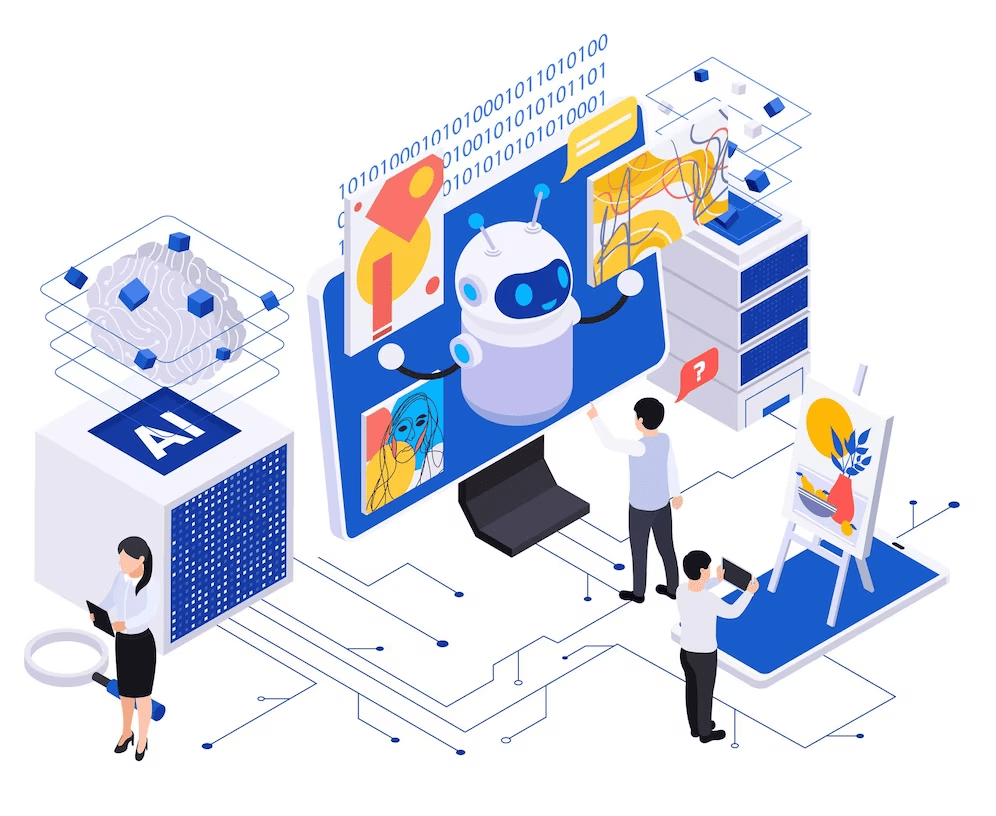
Artificial intelligence, once a futuristic concept, has rapidly become an integral part of our daily lives. From virtual assistants and recommendation systems to autonomous vehicles and advanced healthcare diagnostics, AI is transforming industries across the globe.
Key Components of the Ecosystem
The AI development ecosystem consists of several key components:
Innovators and Tech Giants
Prominent technology companies, such as Google, Amazon, Microsoft, and Facebook, are at the forefront of AI development. They drive innovation by investing in research, developing cutting-edge AI technologies, and offering AI-based products and services.
Startups and Entrepreneurs
The AI landscape is enriched by a thriving startup culture. Emerging companies are constantly pushing the boundaries of AI with novel solutions, contributing to the diversity of the ecosystem.
Research Institutions
Universities and research institutions play a pivotal role in advancing AI. They foster innovation, conduct groundbreaking research, and educate the next generation of AI experts.
Open-Source Communities
Open-source platforms like TensorFlow, PyTorch, and scikit-learn have democratized AI development. They enable developers worldwide to access powerful AI tools and contribute to the collective knowledge.
Collaboration in AI Development
The Power of Collaboration
In the AI development ecosystem, collaboration is more than a buzzword—it’s a driving force behind progress. Collaborations between these key players lead to breakthroughs and accelerate the adoption of AI technologies.
Industry-Academia Collaborations
Partnerships between universities and industry leaders facilitate the transfer of knowledge from academia to real-world applications. Research projects, internships, and joint ventures drive innovation.
Startup and Corporate Partnerships
Large corporations often collaborate with startups to tap into their agility and creativity. Such collaborations fuel rapid development and deployment of AI solutions.
Cross-Platform Integration
Open-source platforms and communities encourage cross-platform integration. Developers from various backgrounds contribute to shared AI libraries, expanding their capabilities.
The Role of AI Consulting Services
Bridging the Gap
AI consulting services play a pivotal role in the AI development ecosystem. They act as bridges between innovation and implementation, offering expertise, guidance, and solutions to organizations seeking to harness AI’s potential.
Expertise and Advisory
AI consultants possess deep knowledge of AI technologies and industry trends. They provide strategic advice on how AI can be effectively integrated into business processes.
Customized Solutions
AI consulting firms create tailor-made AI solutions, aligning them with an organization’s specific needs and objectives. These solutions can range from machine learning models to AI-driven software applications.
Ethical Considerations
AI consulting services also address ethical considerations in AI development. They guide organizations in developing AI systems that are fair, transparent, and unbiased.
The Future of Collaboration in AI Development
Expanding Horizons
The AI development ecosystem is poised for continued growth and collaboration. As AI technologies mature, we can expect even more innovative applications across various sectors.
Addressing Challenges
Collaboration in AI development is not without challenges. Issues related to data privacy, security, and ethical concerns must be carefully managed to ensure responsible AI development.
The Significance of Data in AI Development
Data: Fueling the AI Revolution
Data is the heartbeat of AI development. It serves as the raw material from which AI systems learn, make predictions, and generate insights. Without data, AI would be a dormant concept, unable to exhibit intelligence.

The Data-Driven Approach
AI development relies on a data-driven approach, where large volumes of data are collected, processed, and utilized to train AI models. This process empowers AI systems to recognize patterns, make informed decisions, and perform tasks that mimic human intelligence.
Data Collection Strategies
The Quest for High-Quality Data
In AI development, not all data is created equal. High-quality data is essential for building robust and accurate AI models. Data collection strategies encompass:
Diverse Data Sources
AI developers cast a wide net to gather data from various sources, including sensors, social media, websites, and IoT devices. The diversity of data sources enriches AI systems.
Annotated Data
Data annotation involves labeling data to provide context and meaning. For instance, in image recognition, annotating images with labels (e.g., “cat” or “dog”) enables AI models to learn from the data.
Data Augmentation
Data augmentation techniques involve creating variations of existing data to increase dataset size. This process enhances the ability of AI models to generalize from the data.
Data Preprocessing: Cleaning and Transformation
Refining Raw Data
Raw data is often messy and requires careful preprocessing before it can be used for AI development. Data preprocessing involves:
Cleaning Data
Identifying and rectifying errors, outliers, and missing values in the data. Clean data ensures the reliability of AI models.
Feature Engineering
Feature engineering involves creating new features from existing data to enhance model performance. It requires domain knowledge and creativity.
Scaling and Normalization
Scaling data ensures that all features have the same influence on model training, preventing some features from dominating others.
The Role of AI Consulting in Data Management
Leveraging Data for Success
AI consulting services specialize in optimizing the use of data for AI development. Their expertise includes:
Data Strategy
AI consultants help organizations formulate data strategies, ensuring that data collection aligns with project objectives and compliance requirements.
Data Quality Assurance
Ensuring data quality is a top priority for AI consulting services. They implement rigorous data validation and cleansing procedures.
Data Security and Privacy
AI consultants address data security and privacy concerns, helping organizations safeguard sensitive information and comply with regulations like GDPR.
Data-Driven Success Stories
Real-World Applications
Data-driven AI development has led to transformative applications across various industries:
Healthcare
AI models trained on medical data can assist in disease diagnosis, drug discovery, and personalized treatment recommendations.
Finance
In the financial sector, AI uses historical market data and real-time information for predictive analytics, fraud detection, and algorithmic trading.
Retail
Retailers leverage customer data for personalized marketing, demand forecasting, and inventory management.
Autonomous Vehicles
Self-driving cars rely on vast amounts of sensor data to make real-time decisions and navigate safely.
Ethical Considerations in Data-Driven AI Development
Responsible Data Usage
As AI development becomes more data-centric, ethical considerations are paramount:
Bias and Fairness
AI developers must be vigilant to prevent bias in data and algorithms, ensuring that AI systems provide fair and equitable outcomes.
Privacy
Respecting data privacy rights is crucial. Organizations must obtain informed consent and protect individuals’ data.
Transparency
AI developers should be transparent about data usage and provide clear explanations of how AI systems make decisions.
The Significance of Algorithms in AI Development
Algorithms: The Heart of Artificial Intelligence
Algorithms are the intellectual core of AI development. They are the mathematical and computational recipes that enable AI systems to process data, recognize patterns, make predictions, and perform tasks with remarkable precision. Without algorithms, AI would be devoid of intelligence.

The Diversity of AI Algorithms
AI encompasses a wide spectrum of algorithms, each tailored to specific tasks and domains. Some of the most prominent AI algorithms include:
Supervised Learning Algorithms
These algorithms learn from labeled training data and are used for tasks like classification and regression. Examples include Decision Trees, Random Forests, and Support Vector Machines.
Unsupervised Learning Algorithms
Unsupervised learning algorithms discover patterns in unlabeled data. Clustering algorithms, such as K-Means and hierarchical clustering, fall into this category.
Deep Learning Algorithms
Deep learning algorithms, particularly neural networks, are responsible for the remarkable achievements in areas like image recognition, natural language processing, and speech recognition.
Reinforcement Learning Algorithms
Reinforcement learning algorithms enable AI systems to learn through interaction with their environment, making them suitable for applications like autonomous robotics and game playing.
The Role of Algorithms in AI Development
How Algorithms Learn
Algorithms learn by processing data iteratively. This learning process involves several key components:
Model Representation
Algorithms are represented by mathematical models that capture the relationships between input data and desired output.
Training Data
Algorithms require training data to learn. This data is fed into the model, and the algorithm adjusts its parameters to minimize the difference between its predictions and the actual outcomes.
Loss Functions
Loss functions quantify the error between the algorithm’s predictions and the true outcomes. Algorithms aim to minimize this error during training.
Hyperparameter Tuning
Selecting the right hyperparameters is critical to an algorithm’s performance. Hyperparameter tuning involves optimizing settings like learning rates and model architectures.
The Power of Algorithm Selection in AI Development
Customization for Specific Tasks
The choice of algorithm is highly dependent on the specific task at hand. AI developers and AI consulting services must carefully select algorithms that are best suited for the problem they aim to solve.
Model Complexity
Different tasks require varying levels of model complexity. Simple algorithms may suffice for straightforward tasks, while complex deep learning models may be necessary for intricate problems.
Performance and Efficiency
Algorithms also vary in terms of performance and computational efficiency. Selecting the right algorithm can significantly impact the speed and resource requirements of an AI solution.
The Role of AI Consulting in Algorithm Selection
Expert Guidance
AI consulting services provide expert guidance in algorithm selection. Their deep knowledge of algorithms and their practical applications ensures that organizations choose the most appropriate algorithms for their projects.
Customized Solutions
AI consultants create customized AI solutions by selecting algorithms that align with an organization’s objectives. This tailored approach optimizes performance and delivers maximum value.
Benchmarking and Evaluation
AI consulting firms conduct thorough benchmarking and evaluation of algorithms to determine their effectiveness in real-world scenarios. This ensures that the selected algorithms meet performance expectations.
Real-World Applications of AI Algorithms
Across Industries
AI algorithms are driving innovation across various industries:
Healthcare
In healthcare, algorithms aid in disease prediction, medical image analysis, and drug discovery.
Finance
In finance, algorithms power algorithmic trading, risk assessment, and fraud detection.
E-commerce
E-commerce platforms use recommendation algorithms to personalize product suggestions for customers.
Autonomous Vehicles
Self-driving cars rely on a combination of algorithms for perception, decision-making, and control.
Ethical Considerations in Algorithm Development
The Challenge of Bias
Algorithmic bias is a significant ethical concern in AI development. Biased data can lead to discriminatory outcomes, such as biased lending decisions or facial recognition errors.

Fairness and Transparency
AI developers and AI consulting services must work to ensure fairness and transparency in algorithmic decision-making. Ethical AI development includes techniques to mitigate bias and provide explanations for algorithmic outputs.
The Rise of Generative AI
Generative AI: Crafting Art and Innovation
Generative AI is a subfield of artificial intelligence that focuses on creating AI systems capable of generating new content, be it text, images, music, or even video. It is the creative force behind AI-powered art, content creation, and innovative applications.
Applications of Generative AI
Generative AI is transforming various industries:
Content Generation
Generative models can autonomously create content, such as articles, stories, and marketing materials. This has profound implications for industries reliant on content creation.
Art and Design
Generative AI is producing stunning artworks, music compositions, and architectural designs, pushing the boundaries of creativity.
Healthcare and Drug Discovery
In healthcare, Generative AI aids in drug discovery by predicting molecular structures and simulating clinical trials.
The Unique Challenges of Generative AI Development
Complexity and Innovation
Generative AI development is inherently complex. It requires the construction of intricate neural networks that can learn and replicate human creativity, a task that demands creativity in itself.
Data Limitations
Generative AI relies heavily on high-quality training data, which can be scarce in creative domains. AI developers often face the challenge of curating and generating sufficient data.
Ethical Considerations
Generative AI’s creative capabilities raise ethical concerns, particularly in content generation. Ensuring AI-generated content is accurate, unbiased, and respectful of copyright is a significant challenge.
The Role of AI Consulting in Generative AI
Specialized Expertise
Generative AI development requires specialized knowledge and skills. AI consulting services offer expertise in this niche field, guiding organizations through the complexities of Generative AI.
Model Selection and Optimization
AI consultants assist in selecting and fine-tuning Generative AI models, ensuring they align with specific creative tasks and ethical considerations.
Ethical Frameworks
AI consulting services play a crucial role in establishing ethical frameworks for Generative AI development. They help organizations navigate issues of bias, misinformation, and copyright infringement.
Real-World Applications of Generative AI
Content Creation
Generative AI is revolutionizing content creation by automating tasks such as writing articles, generating marketing copy, and composing music.
Art and Creativity
Artificial intelligence is producing artworks, music compositions, and even poetry that challenge our perceptions of creativity and authorship.
Virtual Worlds
Generative AI is used to create immersive virtual worlds and video game environments that adapt to player actions and preferences.
Ethical Considerations in Generative AI Development
Copyright and Plagiarism
Generative AI’s ability to create content raises concerns about copyright and plagiarism. AI developers and consulting services must navigate these legal and ethical complexities.
Bias and Fairness
Generative AI can inadvertently perpetuate biases present in training data. Ethical AI development includes measures to identify and mitigate bias in generated content.
Misinformation and Deepfakes
The technology behind Generative AI can be misused to create misleading or harmful content. Ethical considerations involve combatting the spread of misinformation and deepfakes.
The Future of Generative AI and Consulting
Ongoing Advancements
Generative AI continues to advance rapidly. Ongoing research in areas like few-shot learning and cross-lingual understanding promises to expand its creative capabilities.
Ethical Guidelines
As Generative AI becomes more prevalent, the development of ethical guidelines and standards is crucial. This includes addressing issues of bias, misinformation, and copyright infringement.
The Ethics of AI Development
The Ethical Imperative
As AI technologies continue to evolve and permeate various aspects of our lives, addressing ethical concerns in AI development becomes paramount. Ethical considerations ensure that AI systems align with societal values, respect human rights, and avoid harmful consequences.
Ethical Challenges in AI
AI development introduces a host of ethical challenges, including:
Bias and Fairness
AI systems can inherit biases present in the data they are trained on. Addressing these biases is essential to ensure fair treatment across different demographic groups.
Privacy and Data Security
AI often relies on vast datasets, raising concerns about data privacy and security. Collecting, storing, and using data responsibly is a fundamental ethical concern.
Transparency and Accountability
Understanding AI decisions and actions is vital. Ensuring transparency and accountability helps build trust in AI systems.
Ethical Framework for AI Development
Ethical AI Principles
A framework for ethical AI development typically includes the following principles:
Fairness
AI systems should be designed to avoid bias and ensure fairness in their decisions and outcomes.
Transparency
The inner workings of AI models should be transparent and understandable to users and stakeholders.
Accountability
Those responsible for AI systems must be held accountable for their behavior and consequences.
Privacy
AI systems should respect and protect individual privacy rights.
Beneficence
AI systems should be designed to benefit people and society, avoiding harm whenever possible.
Codes of Ethics
Professional organizations, research institutions, and AI developers often adhere to codes of ethics. For example, the ACM (Association for Computing Machinery) has established a code of ethics for computing professionals, which includes principles related to AI development.
Responsible AI Development
Data Quality and Bias Mitigation
Addressing bias and ensuring data quality are paramount in responsible AI development. Steps include carefully curating training data, auditing datasets for bias, and using techniques like re-sampling or re-weighting to mitigate bias.
Explainable AI
Making AI systems more transparent and understandable is an ongoing challenge. Techniques like interpretable models and Explainable AI (XAI) methods aim to shed light on AI decision-making processes.
Ethical Considerations in Generative AI Development
Generative AI development introduces unique ethical challenges:
Creative Authorship
Generative AI can produce content that blurs the lines of authorship. Ethical considerations involve attributing AI-generated content appropriately.
Misinformation and Deepfakes
Generative AI can be misused to create misleading content and deepfakes. Ethical AI development includes measures to combat misinformation and prevent malicious use.
Copyright and Plagiarism
Generative AI’s ability to create content raises concerns about copyright and plagiarism. Ethical considerations involve respecting intellectual property rights.
The Role of Generative AI Consulting in Ethical AI Development
Expert Guidance
Generative AI consulting services bring ethical expertise to AI development projects. They can identify potential ethical pitfalls, provide guidance on responsible data collection and usage, and implement fairness and transparency measures.
Auditing and Validation
Generative AI consultants conduct audits and validation processes to ensure that AI systems adhere to ethical guidelines and are free from unintended biases.
AI Ethics in Practice
Healthcare
In healthcare, AI is used for diagnostics, treatment recommendations, and patient management. Ethical AI ensures that these systems do not discriminate against patients based on factors like race or gender and that they maintain patient privacy.
Content Moderation
Online platforms use AI for content moderation. Ethical AI development aims to strike a balance between freedom of expression and protecting users from harmful content.
Criminal Justice
AI is used in criminal justice for risk assessment and sentencing recommendations. Ethical AI helps ensure that these systems do not perpetuate existing biases and that they provide fair and transparent recommendations.
The Future of Ethical AI
A Collective Responsibility
Ethical AI development is an ongoing process that requires collaboration among developers, researchers, policymakers, and the public. As AI technologies continue to advance, ethical considerations will evolve as well.
Regulation and Legislation
Governments and regulatory bodies are increasingly recognizing the need for AI regulation. Legislation aimed at ensuring AI ethics and responsible development is on the horizon in many jurisdictions.
AI Deployment Strategies
Unleashing the Power of AI
AI development is not complete until AI systems are deployed to deliver real-world value. Successful AI deployment requires careful planning, strategy, and execution.

Strategies for Success
Proof of Concept (PoC)
Many organizations begin with a PoC to validate AI’s potential benefits for their specific use cases. This stage helps demonstrate feasibility and secure support for larger deployments.
Pilot Projects
Pilot projects involve deploying AI in a limited scope to evaluate its performance and gather user feedback. This iterative approach allows for refinements before full-scale deployment.
Scaling Up
After successful pilots, organizations scale up AI solutions to broader areas or across multiple departments. This phase involves optimizing AI systems for production use and integrating them into existing workflows.
The Role of AI Consulting in Deployment
Expert Guidance
AI consulting services play a crucial role in AI deployment:
Strategy Development
Consultants assist organizations in formulating an AI deployment strategy that aligns with their objectives, budget, and timeline.
Technology Selection
Choosing the right AI tools and technologies is critical. AI consultants help organizations select and implement the most suitable solutions.
Implementation and Integration
AI consulting services oversee the implementation of AI systems, ensuring seamless integration into existing infrastructure and processes.
Change Management
Change management is essential during AI deployment. AI consultants help organizations manage the transition, train personnel, and address resistance to change.
AI in the Future of Work and Society
Transforming Industries
AI deployment has far-reaching effects across various sectors:
Healthcare
AI aids in diagnosing diseases, personalizing treatment plans, and drug discovery. Telemedicine and AI-driven medical devices are becoming increasingly common.
Finance
AI is used for fraud detection, algorithmic trading, and customer service. Chatbots and robo-advisors are changing the way financial services are delivered.
Manufacturing
AI-driven automation improves efficiency and quality in manufacturing. Smart factories and predictive maintenance are becoming industry standards.
Transportation
Self-driving cars and AI-powered logistics are revolutionizing transportation, making it safer and more efficient.
The Future of AI
AI continues to evolve, and several trends are shaping its future:
Explainable AI (XAI)
XAI is gaining importance, as users and regulators demand transparency in AI decision-making. AI systems must provide understandable explanations for their actions.
Edge AI
Edge AI involves deploying AI models directly on devices or at the network’s edge, enabling real-time processing and decision-making without relying on centralized servers.
AI in IoT
The combination of AI and the Internet of Things (IoT) is opening up new possibilities for data analysis, predictive maintenance, and automation in various industries.
AI Ethics and Regulation
As AI becomes more pervasive, ethical considerations and regulations will continue to evolve to ensure responsible AI development and deployment.
Conclusion
In this article, we’ve explored the critical phase of AI deployment and its transformative impact across industries. Successful AI deployment requires strategic planning, technology selection, and expert guidance—areas where AI consulting services excel.
AI is no longer just a technological marvel; it is an integral part of our daily lives and the future of work and society. As AI continues to advance, it brings both opportunities and challenges. The responsible and ethical development and deployment of AI technologies are essential to harness their full potential.
We’ve also glimpsed into the future of AI, where trends like Explainable AI, Edge AI, and the integration of AI with IoT will shape the landscape. Ethical considerations and regulations will play a vital role in ensuring AI’s responsible use.
Thank you for joining us on this journey through the AI development ecosystem. As the AI landscape continues to evolve, let’s embrace the opportunities it offers while remaining vigilant in addressing its ethical implications. With responsible development and the guidance of AI consulting services, we can look forward to a future where AI enhances our lives and transforms industries for the better.
 Tech Zoe