In today’s digital age, organizations deal with an enormous amount of information contained within documents. Extracting relevant data from these documents can be a time-consuming and error-prone task. However, with the advent of intelligent document processing (IDP) and advanced technologies such as artificial intelligence (AI) and machine learning (ML), organizations can now automate and streamline their document-driven workflows. In this article, we will explore the concept of intelligent document processing, the benefits it offers, and the role of intelligent document processing software in transforming businesses.
Understanding Intelligent Document Processing
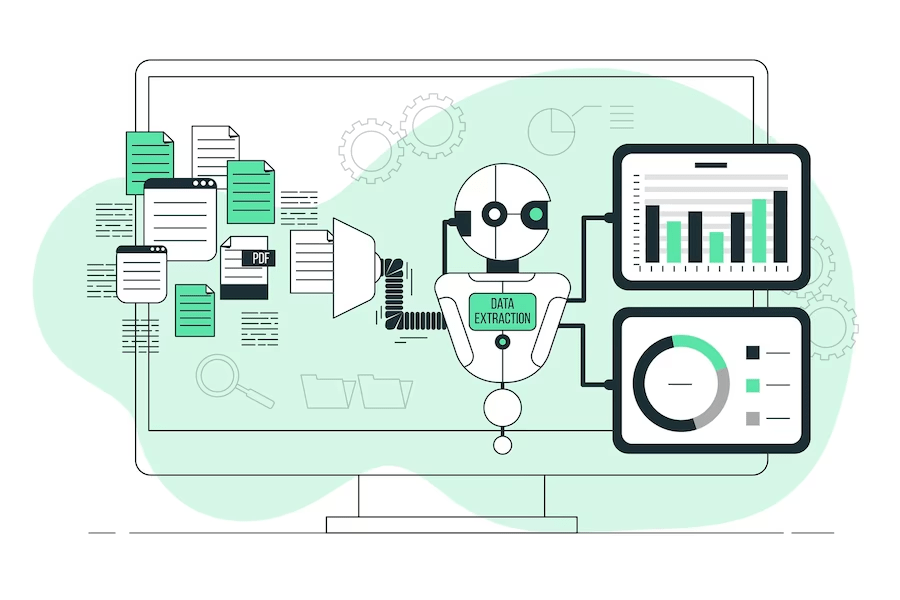
Intelligent document processing refers to the use of AI and ML technologies to automate the extraction, classification, and validation of data from various types of documents. This includes invoices, purchase orders, receipts, contracts, customer forms, and more. IDP combines optical character recognition (OCR), natural language processing (NLP), and other advanced techniques to understand and interpret the content of documents, extracting relevant data and enabling automated decision-making processes.
The Benefits of Intelligent Document Processing
- Enhanced Efficiency: Intelligent document processing eliminates the need for manual data entry and repetitive document handling tasks. By automating these processes, organizations can significantly reduce processing time, allowing employees to focus on more value-added activities.
- Improved Accuracy: Traditional manual data entry methods are prone to errors. IDP software leverages AI algorithms to extract data with high accuracy, minimizing human errors and ensuring reliable and consistent results. This leads to improved data quality and reduces the risk of costly mistakes.
- Increased Productivity: With intelligent document processing, organizations can process large volumes of documents in a shorter time frame. This scalability and speed contribute to increased productivity and faster turnaround times, enabling businesses to handle growing document volumes efficiently.
- Enhanced Compliance: Compliance with industry regulations and data privacy laws is a crucial concern for organizations. Intelligent document processing software ensures that sensitive information is handled securely and helps organizations meet regulatory requirements by providing audit trails, data encryption, and access control mechanisms.
- Cost Savings: By automating document processing tasks, organizations can save significant costs associated with manual labor, errors, and inefficient processes. Moreover, IDP reduces the need for physical storage space, as digital documents can be stored and accessed easily, leading to further cost savings.
The Role of Intelligent Document Processing Software
Intelligent document processing software forms the backbone of IDP implementation. These software solutions leverage AI and ML algorithms to extract data from documents, validate and classify information, and integrate it into existing systems. Key features of intelligent document processing software include:
- Optical Character Recognition (OCR): OCR technology enables the conversion of scanned or printed documents into editable and searchable text. It accurately extracts text from images or documents with different fonts, layouts, and languages.
- Data Extraction and Validation: IDP software uses AI and ML algorithms to identify and extract relevant data fields from documents, such as names, addresses, dates, and invoice numbers. It also verifies the extracted data against predefined rules and validates its accuracy.
- Document Classification: Intelligent document processing software employs NLP techniques to classify documents based on their content, layout, or metadata. This helps in routing documents to the appropriate workflows or departments for further processing.
- Integration and Workflow Automation: IDP software integrates seamlessly with existing systems, such as content management systems (CMS) or enterprise resource planning (ERP) systems. It automates document workflows, ensuring smooth and efficient processing from ingestion to extraction, validation, and storage.
The Future of Intelligent Document Processing
As AI and ML technologies continue to advance, the capabilities of intelligent document processing will expand further. The integration of IDP with other emerging technologies like robotic process automation (RPA), chatbots, and voice recognition will lead to even more streamlined and intelligent document workflows. The ability to handle unstructured data, including handwritten documents or complex contracts, will also improve, opening up new possibilities for automation.
In conclusion, Intelligent document processing is revolutionizing the way organizations handle and extract value from their document-driven processes. By leveraging AI and ML technologies, businesses can achieve higher efficiency, accuracy, and productivity, while reducing costs and improving compliance. Intelligent document processing software plays a crucial role in enabling this transformation by automating document workflows, extracting data, and integrating seamlessly with existing systems. As the technology continues to evolve, organizations that embrace intelligent document processing will gain a competitive advantage in managing and extracting insights from their vast document repositories.
Articles referenced include:
https://www.leewayhertz.com/intelligent-document-processing-idp/
https://www.leewayhertz.com/ml-model-engineering-services/
 Tech Zoe